Whether you are designing a kitchen countertop, a commercial wood floor, exterior siding, or an interior accent wall, you have a range of choices for coating the surface—or not.
Read More
Whether you are designing a kitchen countertop, a commercial wood floor, exterior siding, or an interior accent wall, you have a range of choices for coating the surface—or not.
Read MoreHardness is represented as a Janka rating, and the number equates to the amount of "pounds-force" required to push a steel ball (a little over 1/2" diameter) into the surface of the wood to half the diameter of the ball (or about 1/4" deep).
Read MoreNo, this isn’t an indication of our wood’s academic performance, or yours. It’s a way of communicating to you what features you will find on our wood products. Every piece of wood is unique. Different grades of wood are applicable in some use cases, while they just won’t work in other cases.
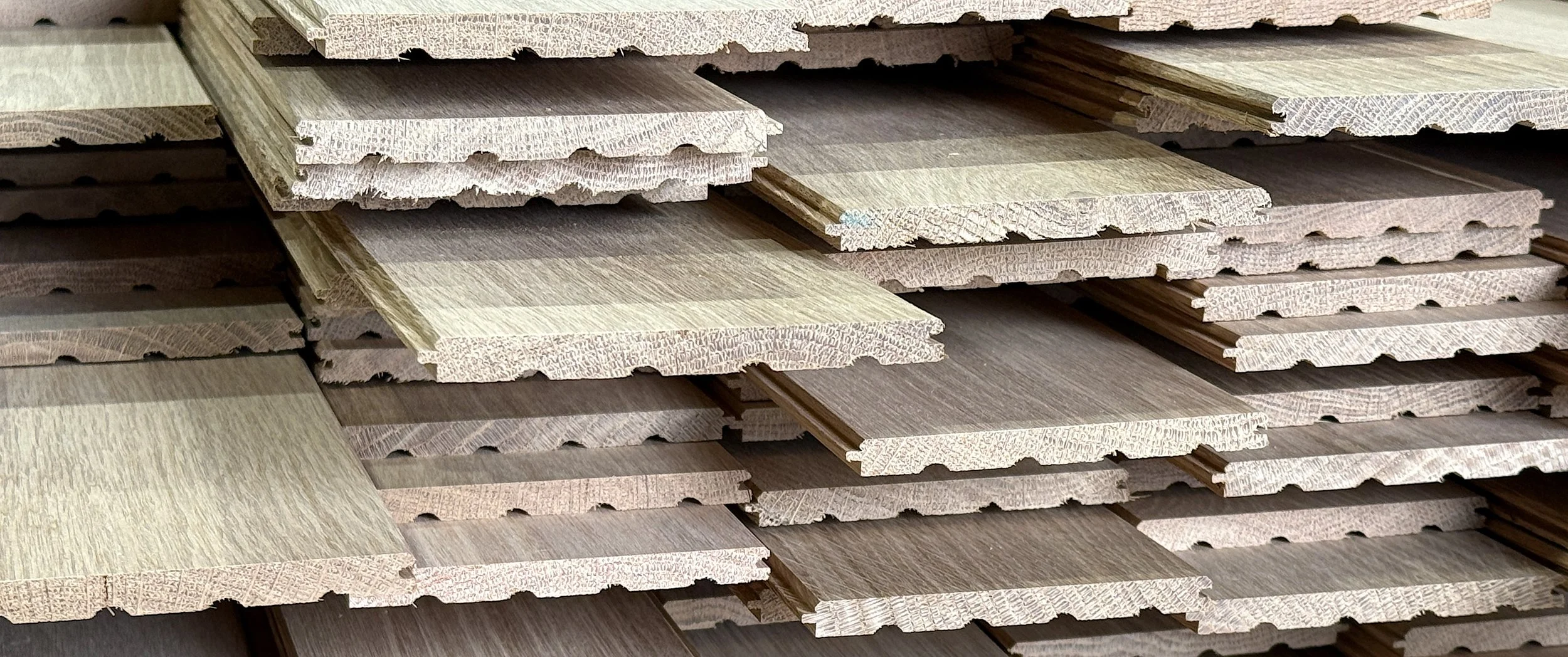
Read MoreWood products come in a variety of profiles. We list the options on the products page of our website as well as on the cut sheets provided on product pages and on Material Bank. Here is a run-down of a few of our most popular options.
Read MoreThe Flame Spread Index of each species of wood helps evaluate the wood for your application. This typically will only apply to commercial interiors, and the majority of the woods we work with are within the class C range for commercial use.
Read MoreOnce installed, quality engineered wood will be difficult to distinguish from solid wood (usually the finish, and how the planks lay together will be the signals). With our thick wear layers it can also be sanded and refinished.
Read More